Tuesday, February 17, 2026

Sort It! Find It! Group It! A playful way to grow your child’s math thinking skills


                                                       Sort It Find It Group It


    You don’t need worksheets, apps, or special activities to support early math at home. Some of the most important math learning for young children happens during everyday moments—while playing, cleaning up, and helping around the house. One simple and powerful idea is sorting and classifying.

    We spend a lot of time learning how to sort, find, and group our learning materials, toys, and school supplies in TK. The TK Bunnies might group objects by:

  • color

  • size

  • shape

  • or what kind of thing it is (cars, animals, food, people, etc.)

There is no single right way to sort.
What matters most is that your child is deciding how objects go together.


Sorting is hands-on. Children touch and move objects, and often change their minds.

A child might begin by sorting by color—and then suddenly decide to sort by size instead.
This is not confusion. It is flexible thinking.

Changing the rule is a good sign.

                              Why is sorting such an important math skill?

When children sort, they are learning how to:

  • Notice how things are the same and different

  • Compare objects

  • Organize information

  • Explain their thinking using words

These are the thinking skills children later use for pattern recognition, number recognition, and problem-solving. Sorting helps build a strong foundation for all future math learning.


                                     Easy ways to sort at home (no prep needed)

The best sorting activities happen naturally. Let your child choose how to group the items.

Laundry time

Spread out socks or small clothing items and ask:

“How could we sort these?”

Your child might choose:

  • by color

  • by long socks and short socks

  • by adult socks and kid socks

Toy clean-up

Instead of saying, “Put your toys away,” try:

“Can you put toys together that belong together?”

For example:

  • vehicles together

  • animals together

  • dolls or people together

In the kitchen

While unpacking groceries or preparing snacks, ask:

“How should we sort these?”

Children might group:

  • fruit and vegetables

  • cold food and pantry food

  • boxes and cans

The one question that makes it math

After your child finishes sorting, ask:

“Why did you put these together?”

That one question helps your child:

  • explain their thinking

  • build language

  • feel confident sharing ideas

There is no wrong answer.

A gentle next step (only if your child is interested)

Once your child has finished sorting, you can ask:

“Can you sort them a different way?”

This helps children learn an important idea:
The same objects can belong to different groups, depending on the rule.

If your child is done and ready to move on, that is perfectly okay.

Two books that make sorting fun

Stories that show children grouping and organizing objects help make sorting feel familiar and playful.


  • The Button Box By Margarette S. Reed
    A child explores a box full of buttons with different colors, shapes, and sizes. This story naturally invites children to notice details and think about many different ways to group objects.


  • Sorting at the Market by Tracey Steffora
    This book shows how people sort foods and items in a market. It helps children see that sorting is something we use in real life.
                                                                

Sorting and classifying are two of the easiest ways to support early math at home.
It fits right into play, clean-up, and everyday routines.

A few objects, a short moment, and one good question are enough to grow your child’s math thinking.

                                                               Happy Sorting!

Sunday, August 31, 2025

Starting a New School Year:

                                           Building Early Math Skills in Preschool & TK/K

        The first days of Transitional Kindergarten or any new grade are full of excitement, curiosity, and new routines. It's also the perfect time to introduce early math skills in playful, everyday ways. Before children begin adding and subtracting, they need a strong foundation in number sense—an understanding of what numbers mean and how they correlate to the world around them.

In the first weeks of school, we focus on:

  • Counting and Cardinality – Knowing number names and counting objects.

  • Sorting and Classifying – Grouping items by color, size, or shape.

  • Recognizing Patterns – Finding what comes next in a sequence.

  • Comparing Quantities – Talking about more, less, bigger, and smaller.


          Reading picture books together is one of the best ways to naturally develop these skills. The rhythm, repetition, and visuals in early math books help children connect concepts to language and real-life experiences.

Here are a few great choices to start the year:

  • Ten Black Dots by Donald Crews – Simple art and text encourage children to count and develop their creativity.

  • Mouse Count by Ellen Stoll Walsh – Engaging story with counting forward and backward.

  • Shapes, Shapes, Shapes by Tana Hoban – Real-life photos help children notice shapes all around them.

  • Pete the Cat and His Four Groovy Buttons by Eric Litwin – A fun introduction to subtraction through song.


Tip for Families: Count, sort, and compare at home! Everyday tasks, such as setting the table, putting away groceries, or sorting laundry, are perfect for building early math skills.

The first few weeks of TK set the tone for the whole year—by mixing stories, hands-on exploration, and conversation, we help children see that math is everywhere.


                                                      Let's start counting!

Monday, June 2, 2025

Exploring Math in Nature

                                                   Measuring Our Way to Summer

           As the school year winds down, our TK Bunnies have been busy exploring math beyond the classroom! With the sunshine calling us outdoors, we’ve turned to nature to help us practice critical measurement skills. Using rocks, sticks, and shells collected during nature walks, the children compared lengths, counted units, and even made their own “nature rulers.” These hands-on experiences helped them understand concepts like longer/shorter, heavier/lighter, and more/less in meaningful ways.


          Back inside, our dinosaur exploration took a mathematical twist! The Bunnies used their familiar math cubes to measure the “bones” of various dinosaurs we created. Without prompting, several of them began to calculate the perimeter of the dinosaur footprints, a moment of unexpected and delightful mathematical thinking in action.


      To keep the learning going at home, here are two picture books that pair perfectly with this kind of measuring fun:


📗 Just a Little Bit by Ann Tompert


       This charming story is about an elephant and a mouse trying to play on a seesaw, only to discover they need just a little bit more weight to balance. It introduces the concept of measurement through weight and balance, sparking discussion about heavier and lighter objects and how to compare them.


📙 Actual Size by Steve Jenkins


       The TK Bunnies loved this nonfiction book, which showcases animals at their actual size, from a gorilla’s hand to a giant squid’s eye. Children are fascinated by the illustrations and naturally begin comparing their own hands, feet, and arms to the animals in the book. It’s a perfect springboard for measuring and comparing lengths using cubes, sticks, or even their own bodies. Additionally, it sparks meaningful conversations about size, scale, and nature.


As always, math is everywhere, especially in nature. Let the outdoors be your child’s next classroom!

                                                                         Happy Summer!

Wednesday, April 30, 2025

Buggy Math Adventures in TK!

                                                        We're Going on A Bug Hunt!

Our youngest entomologists have been buzzing with excitement lately, and it's all thanks to our fascinating insect unit! We've discovered that these tiny creatures aren't just captivating to observe; they're also fantastic tools for building essential math skills.

For the past few weeks, the TK Bunnies have been busy putting on their observation hats and magnifying glasses to explore the world of insects through a mathematical lens. One of their favorite activities has been sorting insects by size. We've collected (or used toy replicas of) various insects, such as ladybugs, grasshoppers, and ants, and the children have eagerly compared them, creating groups of small, medium, and large bugs. This hands-on sorting not only reinforces their understanding of size vocabulary but also lays the foundation for data analysis. Our favorite book was "The Best Bug Parade" by Stewart Murphy, illustrated by Holly Keller. 


Next, it was time to go outside to practice our counting skills. Imagine a group of wiggling caterpillars! Counting the spots on a ladybug's back or the legs on a spider (don't worry, we stick to pictures for this!) becomes a much more engaging task when tied to these intriguing creatures. We've used one-to-one correspondence to count individual insects and even worked on counting sets of insects. Your little ones would enjoy "The Backyard Bug Book" by Lauren Davidson, my class did.


For a bit more of a challenge, we introduced the concept of measuring. Using non-standard units, such as linking cubes or small leaves, the children have been comparing the lengths of different insect models. "This grasshopper is five cubes long!" or "The beetle is shorter than this leaf!" These activities help develop their understanding of length and comparison in a meaningful way. 


To further ignite their curiosity and integrate literacy with our math explorations, here are a few delightful picture books that pair perfectly with our insect math adventures:

  • "The Very Hungry Caterpillar" by Eric Carle: A classic for counting and the life cycle of a butterfly.
  • "Ten Black Dots" by Donald Crews: While not specifically about insects, this book is wonderful for practicing counting sets of objects. Imagine the dots as spots on a ladybug!
  • "Inch by Inch" by Leo Lionni: A charming story about a measuring worm that can inspire discussions about length.
  • "Big Bug Little Bug" by Mem Fox: Perfect for reinforcing size vocabulary and comparisons.

Bringing the outside world into our math lessons has been a huge success. The children were more engaged, and abstract concepts such as size, counting, and measurement became much more concrete and fun when explored through the lens of these fantastic little creatures. We can't wait to see what other mathematical discoveries our insect unit will bring.

                                                          Happy Bug Hunting! 


Saturday, February 15, 2025

Measuring with Love: TK Bunnies Explore Non-Standard Measurement

                  Measuring with Love: TK Bunnies Explore Non-Standard Measurement

This week, our TK Bunnies had a blast exploring non-standard measurement in a fun and engaging way! We started by reading The Love Monster by Rachel Bright, a sweet story that inspired us to create our own Love Monsters. Each Bunny designed a unique monster, and then we used our math skills to measure them using connecting cubes.

This activity supported multiple early math concepts, including:
💗 One-to-one correspondence
💗 Counting in the correct order
💗 Comparing lengths by size


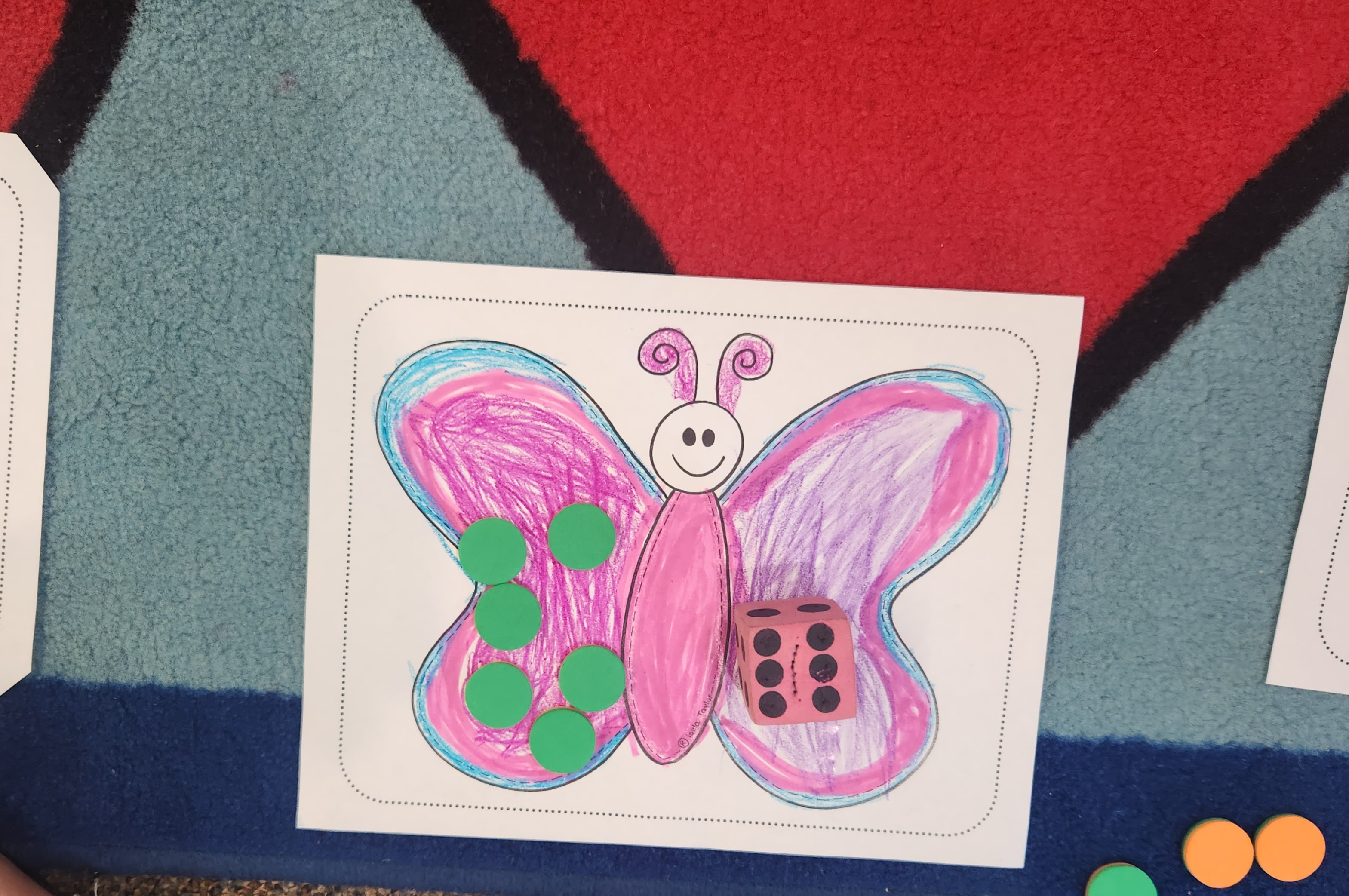
After measuring, the learning didn't stop! One of the Bunnies made an excellent connection to another book we read, The Day It Rained Hearts by Felicia Bond. Inspired by the story, we played a game using foam hearts and giant dice. Each Bunny rolled the dice, counted the number, and then either "rained" or tossed the many foam hearts into a bucket.

It was a joyful, hands-on way to build number sense while fostering creativity and collaboration. Our Bunnies are growing their math skills and making meaningful connections between stories and play. Learning through love, laughter, and exploration—what could be better? 💕


                                                                   Make Math Fun!

#TKMath #NonStandardMeasurement #PlayfulLearning #LoveMonsterMath

Sunday, December 22, 2024

Holiday Counting Magic!

                                            Holiday Counting Magic in Our Early Math Class!

The holiday season brings so many fantastic opportunities for playful math learning! This week, The Bunnies dove into counting activities that brought festive cheer to our number practice. We can't resist cookies on a baking sheet. 


                                                                 *Activity from KinderbyKim

One of our most magical moments was using candy canes to form numbers in "snow." Observing the children shape these sweet treats into digits while developing their number formation skills was delightful. The sensory experience of working with the pretend snow added an extra layer of engagement, making everyone eager to participate.


Our classroom transformed into a winter wonderland during our wreath hunt! Students excitedly searched for hidden wreaths around the room, practicing their counting skills and number writing as they discovered each one. The combination of movement and mathematics kept everyone active and learning.


The highlight of our week was our giant Santa game, in which students rolled dice and used colorful pom-poms as a group activity. The excitement was contagious as children took turns rolling, counting, and adding their pom-poms to Santa. This collaborative approach to counting practice created terrific opportunities for peer learning and celebration.

We've also been exploring counting through our new favorite book, "Chicka, Chicka, Ho, Ho, Ho!" The rhythmic text has become a classroom favorite, and we find ourselves counting along with the story each time we read it. We cut out shapes to decorate our trees. 


                                                                                *Activity by KinderbyKim

The holidays provide endless opportunities for counting practice - from tallying ornaments on our classroom tree to counting the candles in our decorations. These authentic counting experiences help make mathematics meaningful and memorable for our young learners.

Watching our students light up as they discover numbers through these festive activities reminds us that math learning can be joyful and effective when woven naturally into holiday celebrations.


                                                              Happy Holiday Counting!

Sort It! Find It! Group It! A playful way to grow your child’s math thinking skills

                                                          Sort It Find It Group It      You don’t need worksheets, apps, or special activiti...